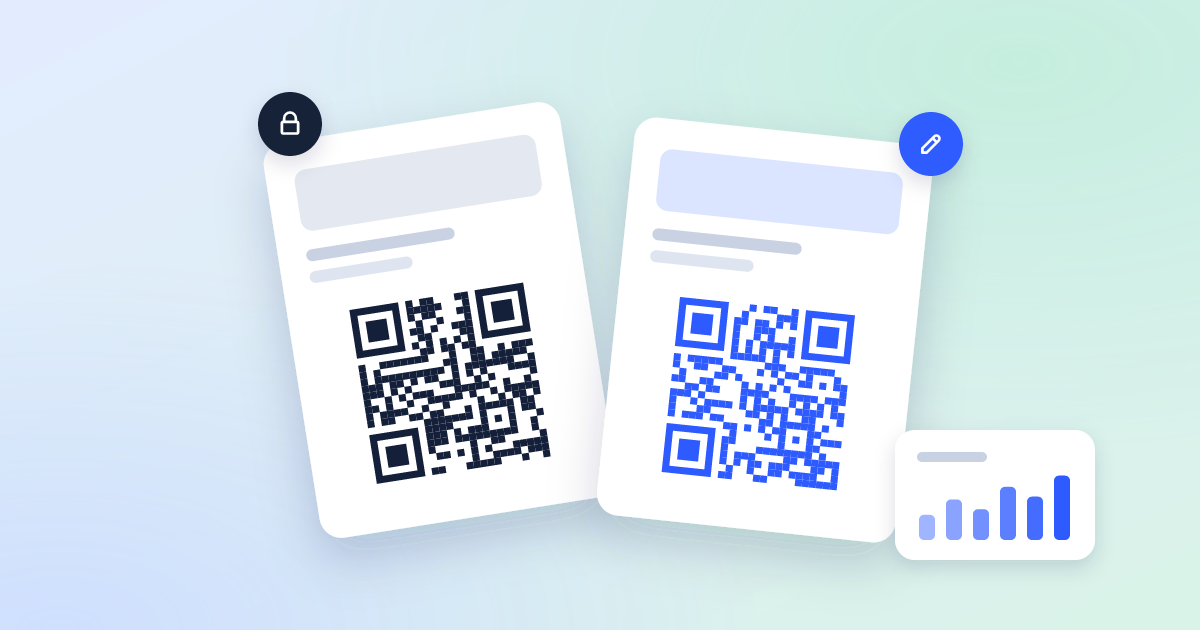
Every QR code looks the same: a square of black and white dots. The difference is in what those dots encode — and that decides what you can still change once the code is printed.
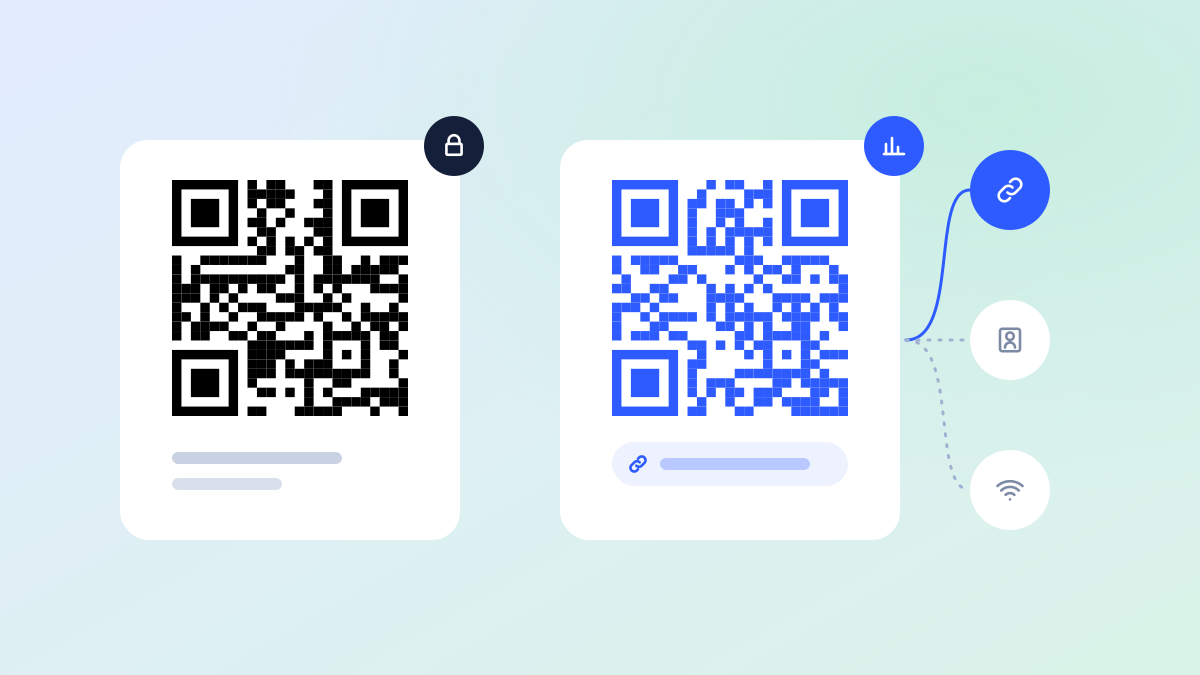
Static: the content is the code
A static code carries its content directly: a web address, a Wi-Fi password, a contact card. The phone reads it and acts on it without asking any server.
- It keeps working for as long as the content stays true.
- It cannot be changed: a new address means a new code and a new print run.
- Nobody sees the scans — there is nothing in between to count them.
Dynamic: the code carries a short link
A dynamic code encodes a short link. When someone scans it, the link opens whatever you have set behind it right now.
- The destination can be changed after printing — even the type of content: a link can become a contact card.
- The code can be paused or archived when the campaign is over.
- Every scan is recorded: when it happened, from which country and on what kind of device.
How to choose
If what the code opens will never change — your home Wi-Fi, a link to your own site on a business card — a static code is enough.
If the code goes on packaging, posters or anything printed in volume, make it dynamic. A typo, a moved page or a new promotion then costs a minute in the workspace instead of a reprint, and you can see whether anyone scans it at all.